Certified Translations
Travel, work and studies may involve the translation of personal, legal, or academic documents. Some examples of these types of documents are:
Visas
Criminal Records
Academic Transcripts
Apostilles
Birth Certificates
Death Certificates
Marriage Certificates
Divorce Decrees
Legal documents such as affidavits, affirmations, etc.
When do I need to “certify” a translation?
The entity requesting the translation determines and informs the client what the requirements are. Depending on the case, a translation may require an Affirmation/Certificate of Accuracy, ATA certification, ATA certification + Notarization.
What is a Certificate of Accuracy/Affirmation?
A Certificate of Accuracy/Affirmation is a signed formal statement from a translator (translation agency) stating that the translation is complete, true, and correct.
What is ATA-Certification?
The ATA-certification credential is the most widely recognized translation credential in the United States.
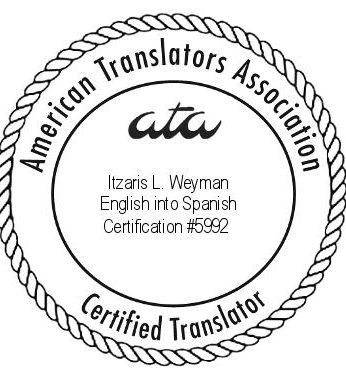
An ATA-certified translation is done by an ATA-certified linguist. ATA-certified linguists must take and pass an examination (as well as maintain said certification by earning continuing education credits). ATA-certification provides evidence that the linguist has the knowledge and skills to provide a quality translation. Clients can verify a linguist’s certification at https://www.atanet.org/directory/. The certification includes the certification number and seal of the ATA-certified translator affixed to the document or on a separate page.
What is an ATA-certified + Notarized Translation?
The requesting entity might also request that a Notary Public witness the ATA-certified translator’s signature. In this case, the ATA-certified linguist must personally sign the certification in front of a Notary Public.